

This article has been machine-translated from Chinese. The translation may contain inaccuracies or awkward phrasing. If in doubt, please refer to the original Chinese version.
This weekly aims to update every Sunday. The website is under construction…
Currently recommend subscribing via Folo to this weekly’s Quaily RSS.
WeChat Official Account: FE Bits. Click the original article link to view the full post.
I created a small QQ discussion group 598022684 — feel free to join for casual discussions about frontend tech & life. You can also submit your own articles. It’s more of a fan group~
This weekly is also open-sourced at fe-bits-weekly, feel free to follow along.
Today is August 24, 2025, Sunday.
This week I built a documentation site for my MoeCopy AI browser extension: https://moe.cosine.ren/docs
The browser extension is open source, lightweight — just enter your own API key to use. Give it a try, and if you like it, a star would be appreciated.
This week was pretty busy and I didn’t have much time to gather material or do deep analysis, so this issue is more of a simple roundup.
A Few Thoughts Before We Start
This week I shared some notes about Cursor’s pricing changes in our work group for colleagues who weren’t familiar. Figured I’d sync the info here too.
Cursor’s pricing page: https://docs.cursor.com/zh/account/pricing
Cursor’s pricing has been adjusted multiple times and people were pretty upset. Initially it was unlimited use — Pro was enough, with 500 fast requests per month, then slow mode after that but still usable. Then they changed it several times, gradually shifting to per-request billing, removing slow requests. Now it’s:
Pro (60/month): For users who use agent coding almost every workday. Ultra ($200/month): For power users who do most of their coding with the agent.
Request limits:
Pro: ~225 Sonnet 4 requests, ~550 Gemini requests, or ~650 GPT 4.1 requests Pro+: ~675 Sonnet 4 requests, ~1,650 Gemini requests, or ~1,950 GPT 4.1 requests Ultra: ~4,500 Sonnet 4 requests, ~11,000 Gemini requests, or ~13,000 GPT 4.1 requests
The official team also says “Models like Opus 4 consume more tokens per request and reach usage limits faster than other models. We recommend being selective and intentional about choosing these models.” Basically they can’t afford to burn those tokens.
Once you exceed your limit, it switches to a very basic auto model, or you can enable max mode for pay-per-use. So Cursor isn’t great value anymore — for development, Tab completion alone is enough.
The Teams version is per-seat billing at $40/month.
Team seats provide each user with 500 requests per month. Each time you use the agent, most models will consume one request. A few models cost more: when you enable thinking, Sonnet 3.7 and Sonnet 4 consume two requests. MAX mode pricing is based on token calculations at the model provider’s API price.
TL;DR: Currently individual/team tiers bill by request count. Paying more for higher tiers just gets you more free requests — no new features. All tiers include all features. Once you exceed the free quota, you get switched to the basic auto model, or you can enable max mode for per-token billing.
The team seems aware of this too — they now specifically emphasize in the pricing description that the $20 version is “for users who mainly use Tab completion and occasionally use the agent.”
Anyone who was going to leave probably already did during July’s pricing change. Those still around either can’t live without Tab or have annual subscriptions.
Personally, I’ve been using Claude Code instead of Cursor’s chat for a while now — I only use Cursor’s Tab feature. Their Tab completion still has no real alternative.
Ecosystem & Community Updates
- Microsoft’s August update for Win11 — did it really brick users’ 1TB drives? Can they be saved?
- Reflections on the React Community: Lee reflects on his decade with React and Next.js, examining community building, tensions between open source and commercial motivations, the development and challenges of React Server Components, and calling for kindness and understanding toward open-source contributors.
- The Future of JavaScript: What Awaits Us: The article summarizes the latest TC39 proposal progress, showing how features from resource management
using,Array.fromAsyncto random numbers and data immutability are shaping JavaScript’s future. - Next.js 15.5 Released, introducing Turbopack builds (beta), stable Node.js middleware, improved TypeScript route types, deprecating
next lint, and previewing deprecation changes for Next.js 16. - React Native 0.81: This update brings Android 16 support, iOS precompiled builds for faster compilation, SafeAreaView deprecation, removal of built-in JSC, and multiple performance improvements and breaking changes.
Articles & Videos
- The Limping Giant: A very interesting perspective.
No matter how high a person climbs in a certain field, they are first and foremost an ordinary person. Like us, they need to breathe, eat, and would equally suffer from malnutrition on a monotonous diet. The reason they become “influencers” or experts is often simply that their post-graduation development path, energy allocation, and industry opportunities led them further down a specific road, dealing with different problems than ours.
The author observes on social media that some users who are influential in their respective fields show limitations of knowledge on certain topics. They’ve invested enormous time and energy into their professional domains at the cost of understanding other areas. This “limping” state makes them vulnerable outside their areas of expertise. This phenomenon is widespread in modern society — deep pursuit often comes at the expense of breadth in other areas. Learning to understand and accept this phenomenon means recognizing that “giants” are ordinary people too, and their “limping” is a product of the times and social division of labor.
Pursuing depth in any field seems to inevitably come at the cost of breadth in others. So when I see those professionals I usually admire making shallow remarks in areas they’re unfamiliar with, I’ve slowly learned to no longer feel surprised or disappointed. What I see is no longer an idol’s fall, but simply a person who invested all their energy into one leg, accidentally trying to walk with the other.
- Server and Client Component Composition in Practice: Exploring the composition practice of Server Components and Client Components.
- Designing Chrome’s Built-in AI Web API: Google Chrome team member Domenic shares insights on the API design approach for Chrome’s latest AI features.
- Circular gallery of rounded images: Using CSS’s
offsetproperty and:nth-childselector, you can create a gallery that arranges multiple images in concentric circles, with an animated version too.
- How a Shopify webhook parsing error led to complete database deletion: An incorrect Shopify Webhook parsing caused by JavaScript destructuring and ORM behavior misunderstandings led to a full database wipe. But solid backup mechanisms enabled successful recovery, highlighting the importance of input validation, authentication, and defensive programming.
- Why LLMs Can’t Really Build Software - Zed Blog: Explores the viewpoint that LLMs currently can’t truly build software, arguing they lack the ability to establish and maintain clear “mental models” like human engineers.
- Web Design: What is the web capable of that is hard to express in design software?: Explores the gap between design software and real Web technology capabilities, emphasizing that dynamic, responsive, and interactive features are hard to express in mockups.
- OpenAI Cookbook: When OpenAI released GPT-5, they also published new tutorials covering prompt guides, new tool usage, and code writing.
- Obsessing Over Smooth radial-gradient() Disc Edges: Explores how to use CSS’s
resolutionmedia query to solve aliasing issues on circle edges created withradial-gradient. - An Interactive Guide to SVG Paths: A quality tutorial diving deep into SVG’s path element, covering how to draw Bezier curves and arcs in detail.
- Terminal, TTY, and Shell, plus SSH — Understanding what they really are: Explains multiple related computing concepts including Terminal, TTY, Shell, and SSH protocol, helping readers understand these terms’ definitions, functions, and their applications in modern computing.
Tools & Library Updates
Tools
- CPTI - Programmer 16 Personality Type Test: An MBTI personality test for programmers. The AI descriptions are pretty accurate — fun concept.
- RegExp Equivalence Checker: An online tool that checks whether two regular expressions match the same strings, showing difference examples and supported syntax.
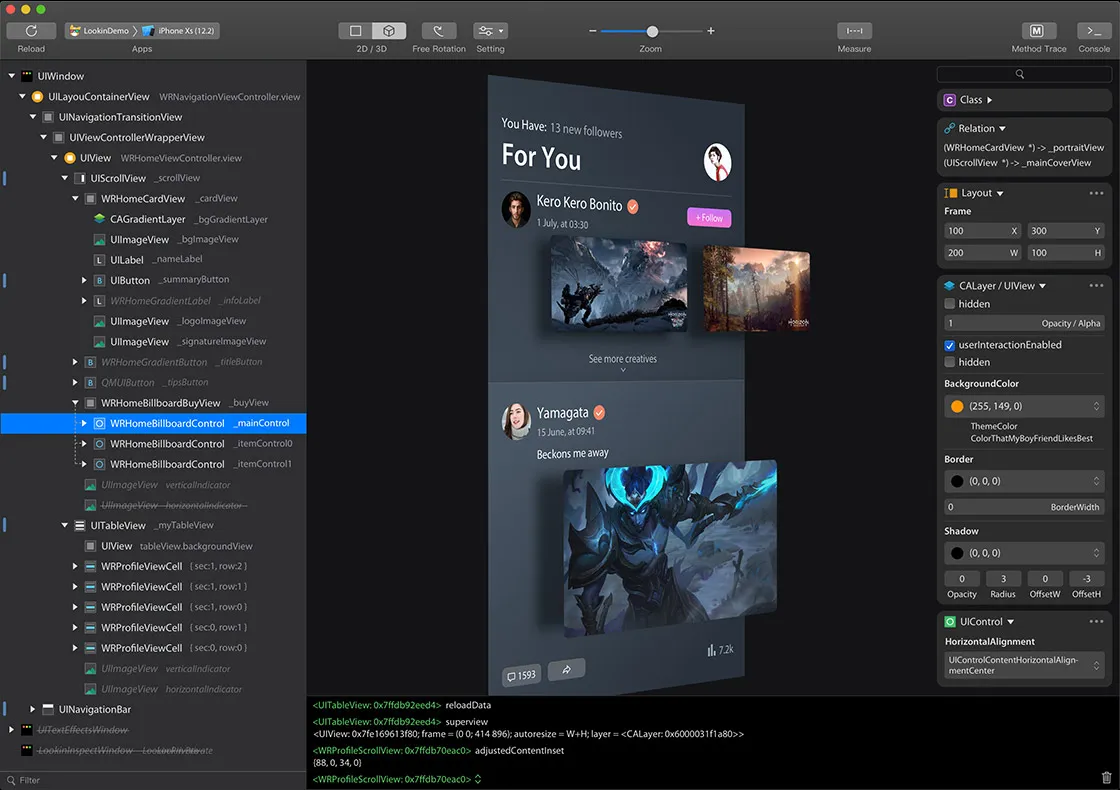
- Lookin: Discovered while looking at iOS development recently. Lookin is a free, open-source UI debugging tool developed by Tencent’s WeRead team, specifically designed for iOS developers. Author’s introduction article: https://mp.weixin.qq.com/s/DL28y2qHkuDv4W_zLUbKcg
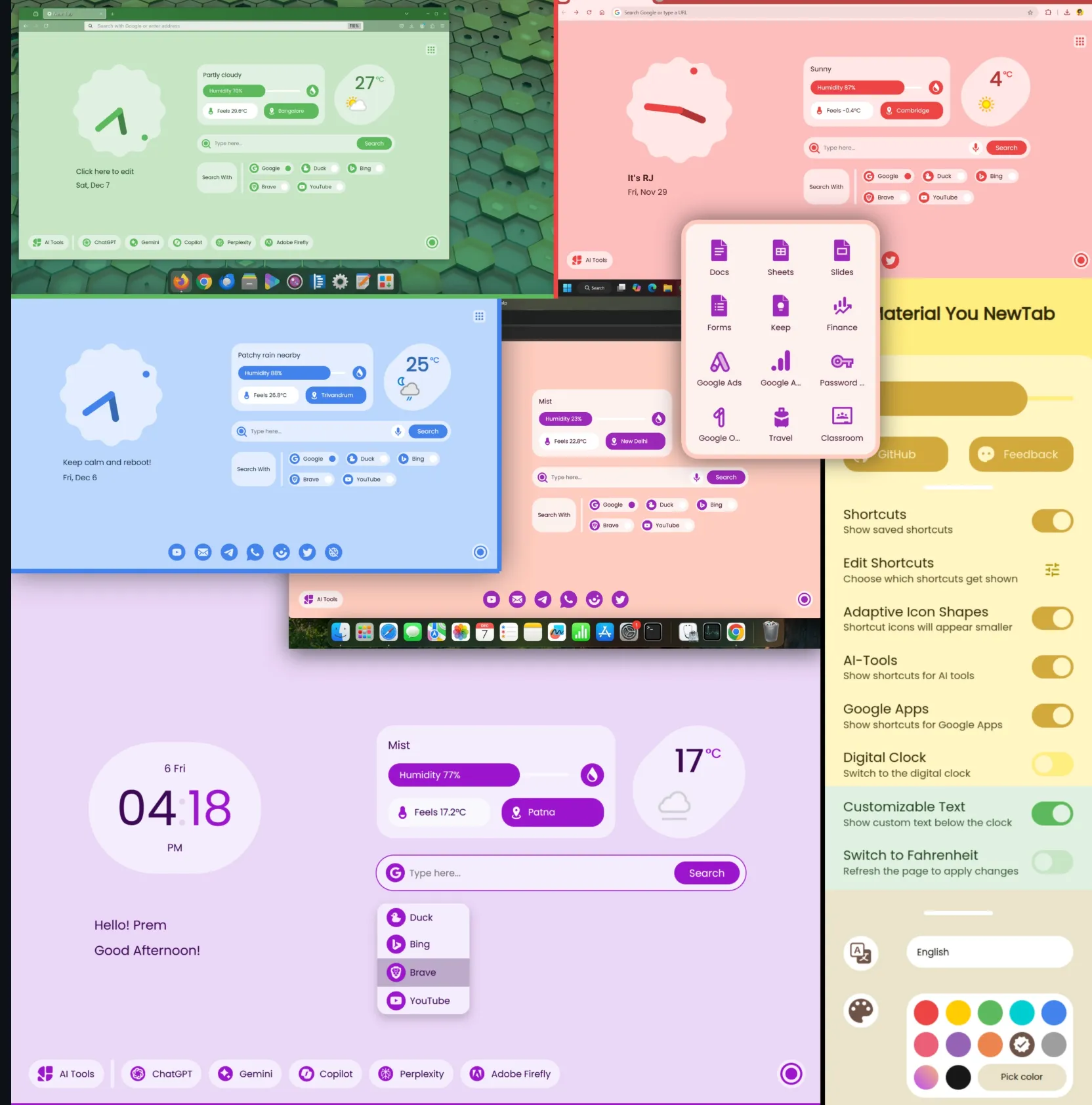
- MaterialYouNewTab: A clean new tab page browser extension inspired by Google’s “Material You” design.
- Streamdown: A react-markdown alternative from Vercel designed specifically for AI streaming responses, capable of intelligently processing and rendering incomplete Markdown content.
- IntraScribe: A localized speech transcription and summarization tool designed for teams that value data privacy, ensuring all data stays on local servers.
- MingCute: A carefully designed open-source icon library offering multiple styles and formats, suitable for both web and mobile design and development.

Library Updates
-
- Turbopack Builds (Beta): Production turbopack builds (next build —turbopack) are now in beta.
- Node.js Middleware (Stable): Node.js runtime support for middleware is now stable.
- TypeScript Improvements: Typed routes, route export validation, and route type helpers.
- next lint: Deprecated the next lint command. You can now choose between ESLint (comprehensive rules), Biome (fast with fewer rules), or no linter. ESLint projects now generate an explicit eslint.config.mjs file instead of relying on the next lint command wrapper, providing full transparency for your lint rules.
-
- Default support for Android 16 (forced edge-to-edge views)
- Experimental iOS precompiled build support, up to 10x speed improvement
- Expo SDK 54 enters beta, integrating RN 0.81 + React 19.1
-
Waku 0.25, Astro 5.13, ESLint v9.33.0, Fastify 5.5, pnpm 10.15, Biome 2.2…
Done~
喜欢的话,留下你的评论吧~